/
/
SUPRASEC® 5005

SUPRASEC® 5005

Short Description:

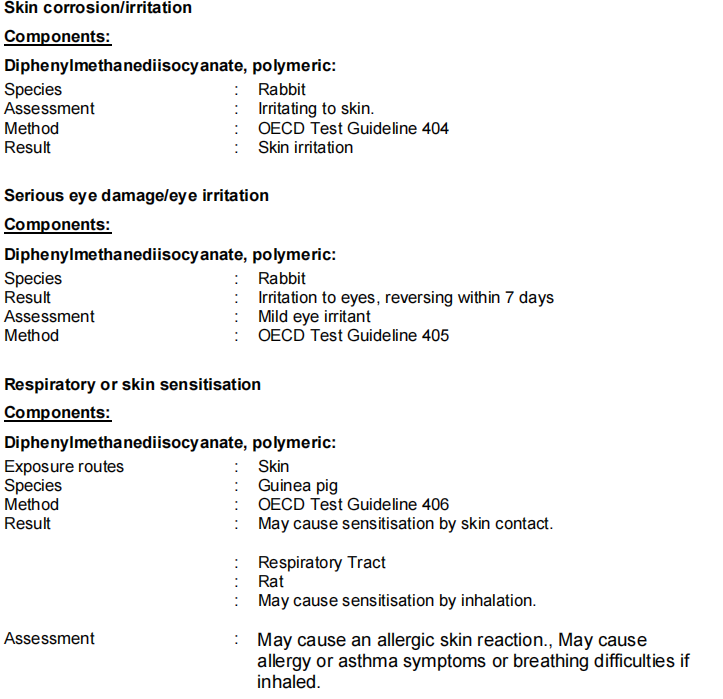
Causes skin irritation. May cause an allergic skin reaction. Causes serious eye irritation. Harmful if inhaled. May cause allergy or asthma symptoms or breathing difficulties if inhaled. May cause respiratory irritation. May cause damage to organs (Respiratory system, Respiratory Tract) through prolonged or repeated exposure if inhaled. Toxic to aquatic life.
PRODUCT AND COMPANY IDENTIFICATION

Manufacturer or supplier’s details

Company: Huntsman Polyurethanes (China) Ltd

Address: 452 Wen Jing Road, Minhang Econ. & Tech, Dev. Zone,Shanghai 200245

Telephone: +86 (0)21 2403 7288

Company: Huntsman Polyurethanes Shanghai Ltd

Address: No.139 Shen Gong Road, SCIP, Shanghai 201507, P.R.China

E-mail address: Global_Product_EHS_HPU@huntsman.com

Emergency telephone number : 

EUROPE: +32 35 75 1234

USA: +1 800 424 9300

ASIA: +65 6542 9595

China: +86 20 39377888

+86 532 83889090

India: + 91 22 42 87 5333

Australia: 1 800 786 152

New Zealand: 0 800 767 437

Recommended use of the chemical and restrictions on use

Recommended use: Component of a Polyurethane System.

Restrictions on use

Professional use of aprotic polar solvents for cleaning.

Consumer spray applications.

Consumer products requiring heating above 40°C

HAZARDS IDENTIFICATION

Emergency Overview

Colour: brown, Clear

Odour: slight, musty

Causes skin irritation. May cause an allergic skin reaction. Causes serious eye irritation. Harmful if inhaled. May cause allergy or asthma symptoms or breathing difficulties if inhaled. May cause respiratory irritation. May cause damage to organs (Respiratory system, Respiratory Tract) through prolonged or repeated exposure if inhaled. Toxic to aquatic life.

GHS Classification

Acute toxicity (Inhalation): Category 4

Skin corrosion/irritation: Category 2

Serious eye damage/eyeirritation: Category 2A

Respiratory sensitisation: Category 1

Skin sensitisation: Category 1

Specific target organ toxicity single exposure: Category 3 (respiratory tract irritation)

Specific target organ toxicity repeated exposure(Inhalation): Category 2 (Respiratory system, Respiratory Tract)

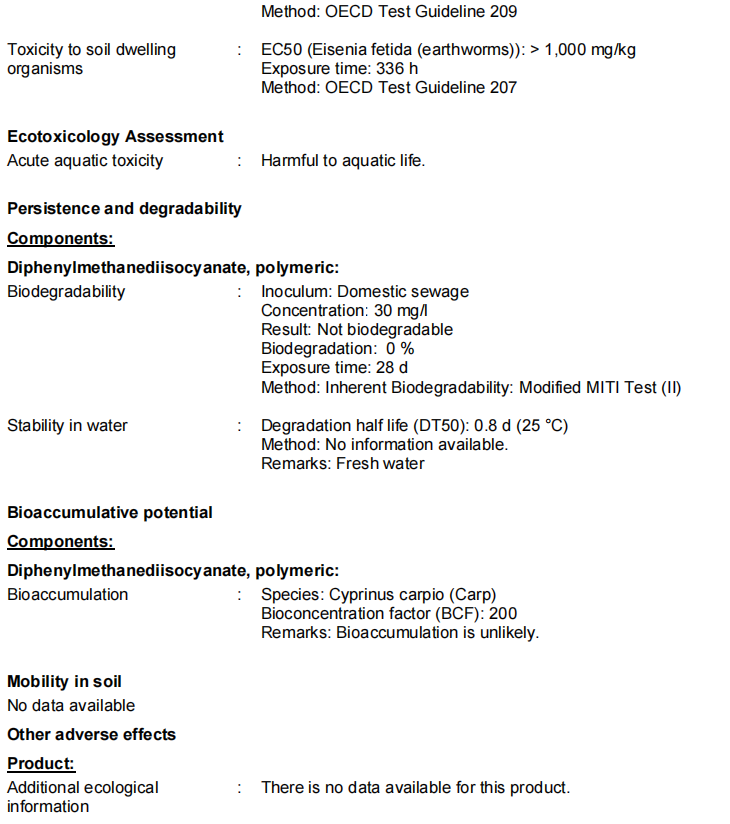
Short-term (acute) aquatic hazard: Category 2

GHS label elements

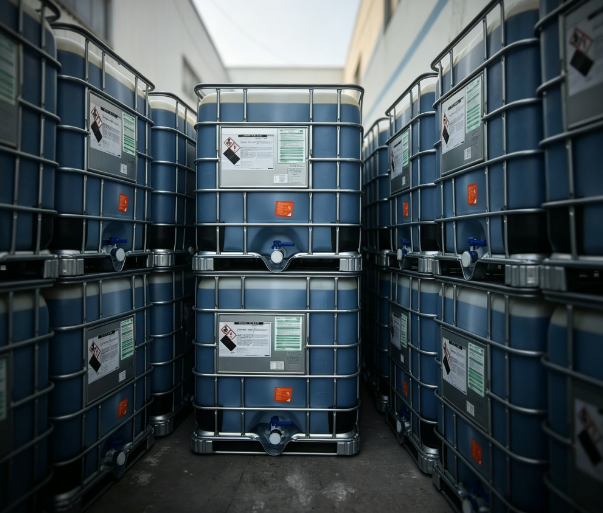
Hazard pictograms:

Signal word: Danger

Hazard statements

H315 Causes skin irritation.

H317 May cause an allergic skin reaction.

H319 Causes serious eye irritation.

H332 Harmful if inhaled.

H334 May cause allergy or asthma symptoms or breathing

difficulties if inhaled.

H335 May cause respiratory irritation.

H373 May cause damage to organs (Respiratory system,

Respiratory Tract) through prolonged or repeated exposure if

inhaled.

H401 Toxic to aquatic life.

Precautionary statements

  Prevention:

  P260 Do not breathe mist or vapours.

  P264 Wash skin thoroughly after handling.

  P271 Use only outdoors or in a well-ventilated area.

  P272 Contaminated work clothing should not be allowed out of the workplace.

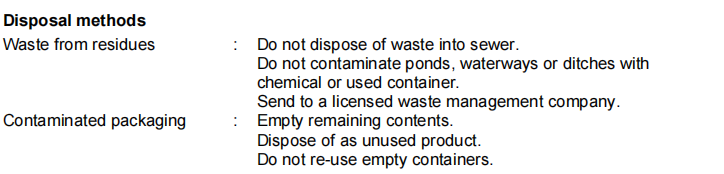
  P273 Avoid release to the environment.

  P280 Wear protective gloves/ eye protection/ face protection.

  P284 Wear respiratory protection.

  Response:

  P302 + P352 IF ON SKIN: Wash with plenty of water.

  P304 + P340 + P312 IF INHALED: Remove person to fresh air and keep comfortable for breathing. Call a POISON CENTER/doctor if you feel unwell.

  P305 + P351 + P338 IF IN EYES: Rinse cautiously with water for several minutes. Remove contact lenses, if present and easy to do. Continue rinsing.

  P333 + P313 If skin irritation or rash occurs: Get medical advice/ attention.

  P337 + P313 If eye irritation persists: Get medical advice/attention.

  P342 + P311 If experiencing respiratory symptoms: Call a POISON CENTER/ doctor.

  P362 + P364 Take off contaminated clothing and wash it before reuse.

  Storage:

  P403 + P233 Store in a well-ventilated place. Keep container tightly closed.

  P405 Store locked up.

  Disposal:

  P501 Dispose of contents/container to an approved facility in accordance with local, regional, national and international regulations.

Physical and chemical hazards

Not classified based on available information.

Health hazards

Harmful if inhaled. Causes skin irritation. Causes serious eye irritation. May cause allergy or

asthma symptoms or breathing difficulties if inhaled. May cause an allergic skin reaction. May

cause respiratory irritation. May cause damage to organs through prolonged or repeated

exposure if inhaled.

Environmental hazards

Toxic to aquatic life.

Other hazards which do not result in classification

None known.
COMPOSITION/INFORMATION ON INGREDIENTS

Substance / Mixture: Substance

Hazardous components

Chemical name
CAS-No.
Concentration (% w/w)
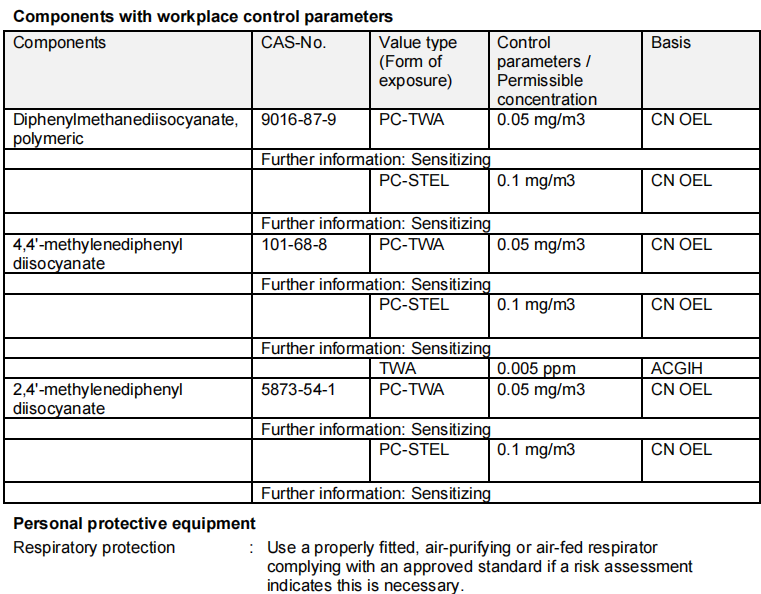
Diphenylmethanediisocyanate, polymeric
9016-87-9
>= 90 - < 100
FIRST AID MEASURES

General advice

Move out of dangerous area.

Do not leave the victim unattended.

Get medical attention immediately if symptoms occur.

Show this safety data sheet to the doctor in attendance.

If inhaled:

If breathed in, move person into fresh air.

Call a physician or poison control centre immediately.

Keep patient warm and at rest.

Keep respiratory tract clear.

If breathing is difficult, give oxygen.

If breathing is irregular or stopped, administer artificial respiration.

If unconscious, place in recovery position and seek medical advice.

Consult a physician immediately if symptoms such as shortness of breath or asthma are observed.

A hyper-reactive response to even minimal concentrations of diisocyanates may develop in sensitised persons.

The exposed person may need to be kept under medical surveillance for 48 hours.

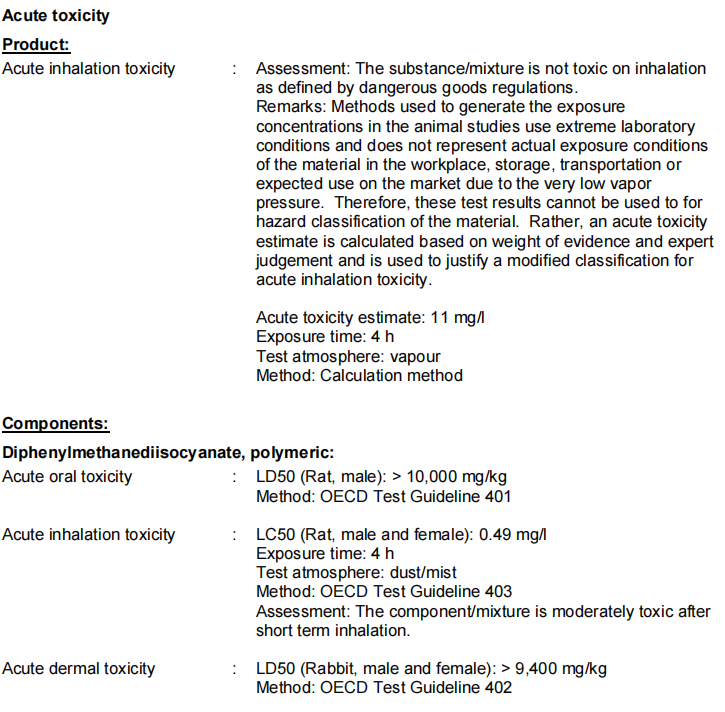
LC50 (rat) : ca. 490 mg/m³ (4 hours) : using experimentally produced respirable aerosol having aerodynamic diameter <5microns.

Methods used to generate the exposure concentrations in the animal studies use extreme laboratory conditions and does not represent actual exposure conditions of the material in the workplace, storage, transportation or expected use on the market due to the very low vapor pressure. Therefore, these test results cannot be used to for hazard classification of the material. Rather, an acute toxicity estimate is calculated based on weight of evidence and expert judgement and is used to justify a modified classification for acute inhalation toxicity.

In case of skin contact

In case of contact, immediately flush skin with soap and plenty of water.

Take off contaminated clothing and shoes immediately.

Wash contaminated clothing before reuse.

Thoroughly clean shoes before reuse.

Call a physician if irritation develops or persists.

An MDI study has demonstrated that a polyglycol-based skin cleanser (such as D-Tam™, PEG-400) or corn oil may be more effective than soap and water.

In case of eye contact

Rinse immediately with plenty of water, also under the eyelids,for at least 15 minutes.

If easy to do, remove contact lens, if worn.

Protect unharmed eye.

Keep eye wide open while rinsing.

Seek medical advice.

If swallowed

Gently wipe or rinse the inside of the mouth with water.

DO NOT induce vomiting unless directed to do so by a physician or poison control center.

Keep respiratory tract clear.

Keep at rest.

If a person vomits when lying on his back, place him in the recovery position.

Never give anything by mouth to an unconscious person.

Take victim immediately to hospital.

If symptoms persist, call a physician.

Most important symptoms and effects, both acute and delayed

Severe allergic skin reactions, bronchiospasm and anaphylactic shock

This product is a respiratory irritant and potential respiratory sensitiser: repeated inhalation of vapour or aerosol at levels above the occupational exposure limit could cause respiratory sensitisation.

Symptoms may include irritation to the eyes, nose, throat and lungs, possibly combined with dryness of the throat, tightness of chest and difficulty in breathing.

The onset of the respiratory symptoms may be delayed for several hours after exposure.

A hyper-reactive response to even minimal concentrations of MDI may develop in sensitised persons.

Protection of first-aiders

No action shall be taken involving any personal risk or without suitable training.

It may be dangerous to the person providing aid to give mouth-to-mouth resuscitation.

If potential for exposure exists refer to Section 8 for specific personal protective equipment.

First Aid responders should pay attention to self-protection and use the recommended protective clothing

Notes to physician

Symptomatic and supportive therapy as needed. Following severe exposure medical follow-up should be monitored for at least 48 hours.

The first aid procedure should be established in consultation with the doctor responsible for industrial medicine.

FIREFIGHTING MEASURES

Suitable extinguishing media : 

Use extinguishing measures that are appropriate to local circumstances and the surrounding environment.

Foam

Carbon dioxide (CO2)

Dry powder

Unsuitable extinguishing media

Water may be used if no other available and then in copious quantities. Reaction between water and hot isocyanate may be vigorous.

Specific hazards during firefighting

Do not allow run-off from fire fighting to enter drains or water courses.

The pressure in sealed containers can increase under the influence of heat.

Exposure to decomposition products may be a hazard to health.

Hazardous combustion products

Combustion products may include: carbon monoxide, carbon dioxide, nitrogen oxides, hydrocarbons and HCN. In the event of extreme heat (>500 degrees C), aniline is suspected of  being formed.

Specific extinguishing methods

Cool containers/tanks with water spray.

Standard procedure for chemical fires.

Due to reaction with water producing CO2-gas, a hazardous build-up of pressure could result if contaminated containers are re-sealed.

Collect contaminated fire extinguishing water separately. This must not be discharged into drains.

Prevent fire extinguishing water from contaminating surface water or the ground water system.

Fire residues and contaminated fire extinguishing water must be disposed of in accordance with local regulations.

Special protective equipment for firefighters

Wear an approved positive pressure self-contained breathing apparatus in addition to standard fire fighting gear. 

ACCIDENTAL RELEASE MEASURES

Personal precautions,protective equipment andemergency procedures

Immediately evacuate personnel to safe areas.

Use personal protective equipment.

If specialised clothing is required to deal with the spillage, take note of any information in Section 8 on suitable and unsuitable materials.

Ensure adequate ventilation.

Keep people away from and upwind of spill/leak.

Environmental precautions

Do not allow uncontrolled discharge of product into theenvironment.

Do not allow material to contaminate ground water system.

Prevent product from entering drains.

Prevent further leakage or spillage if safe to do so.

Local authorities should be advised if significant spillages cannot be contained.

If the product contaminates rivers and lakes or drains inform respective authorities.

Methods and materials for containment and cleaning up

Clean-up methods – small spillage

Contain spillage, soak up with non-combustible absorbent

material, (e.g. sand, earth, diatomaceous earth, vermiculite) and transfer to a container for disposal according to local / national regulations (see section 13).

Clean contaminated surface thoroughly.

Sweep up or vacuum up spillage and collect in suitable container for disposal.

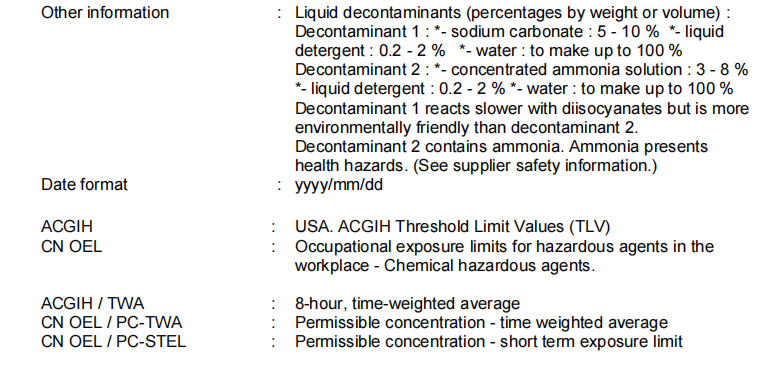
Neutralize small spillages with decontaminant.

The compositions of liquid decontaminants are given in Section 16.

Remove and dispose of residues.

Clean-up methods – large spillage

If the product is in its solid form:

Spilled MDI flakes should be picked up carefully.

The area should be vacuum cleaned to remove remaining dust particles completely.

If the product is in its liquid form:

Soak up with inert absorbent material (e.g. sand, silica gel,acid binder, universal binder, sawdust).

Leave to react for at least 30 minutes.

Shovel into open-top drums for further decontamination.

Wash the spillage area with water.

Test atmosphere for MDI vapour.

Keep in suitable, closed containers for disposal.

Prevention of secondary hazards

Only qualified personnel equipped with suitable protective equipment may intervene.

For additional precautions and advice on safe handling, see section 7.

Never return spills in original containers for re-use.

Make sure that there is a sufficient amount of neutralizing/absorbent material near the storage area.

The danger areas must be delimited and identified using relevant warning and safety signs.

Treat recovered material as described in the section “Disposal considerations”.

For disposal considerations see section 13 

HANDLING AND STORAGE

Handling

Technical measures

Ensure that eyewash stations and safety showers are close to the workstation location.

Local/Total ventilation

Use only with adequate ventilation.

Advice on protection against fire and explosion

Normal measures for preventive fire protection

Advice on safe handling

For personal protection see section 8.

Avoid formation of aerosol.

Do not breathe vapours or spray mist.

Do not breathe vapours/dust.

Do not swallow.

Do not get in eyes or mouth or on skin.

Do not get on skin or clothing.

Avoid exposure – obtain special instructions before use.

Smoking, eating and drinking should be prohibited in the application area.

Provide sufficient air exchange and/or exhaust in work rooms.

Keep container closed when not in use.

Open drum carefully as content may be under pressure.

Dispose of rinse water in accordance with local and national regulations.

Persons susceptible to skin sensitisation problems or asthma,allergies, chronic or recurrent respiratory disease should not be employed in any process in which this mixture is being used.

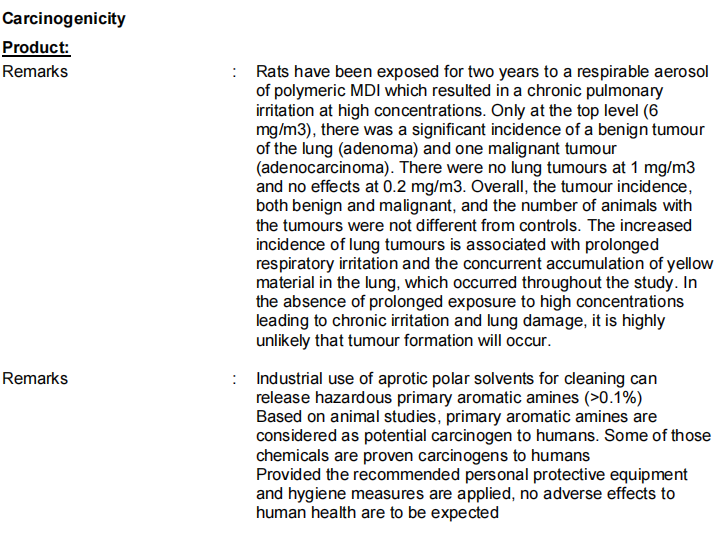
Industrial use of aprotic polar solvents for cleaning can release hazardous primary aromatic amines (>0.1%)

Avoidance of contact

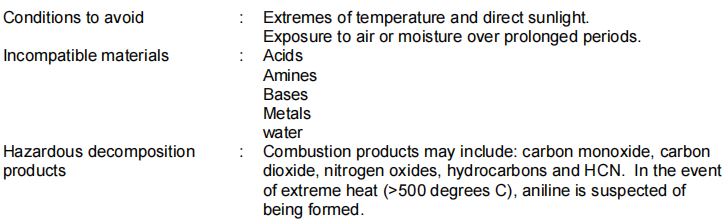
Acids

Amines

Bases

Metals

water

Storage

Conditions for safe storage:

Keep containers tightly closed in a dry, cool and well-ventilated place.

Keep in properly labelled containers.

Observe label precautions.

Protect from moisture.

Electrical installations / working materials must comply with the technological safety standards.

Containers which are opened must be carefully resealed and kept upright to prevent leakage.

Materials to avoid

For incompatible materials please refer to Section 10 of this SDS.

Further information on storage stability

Stable under recommended storage conditions.


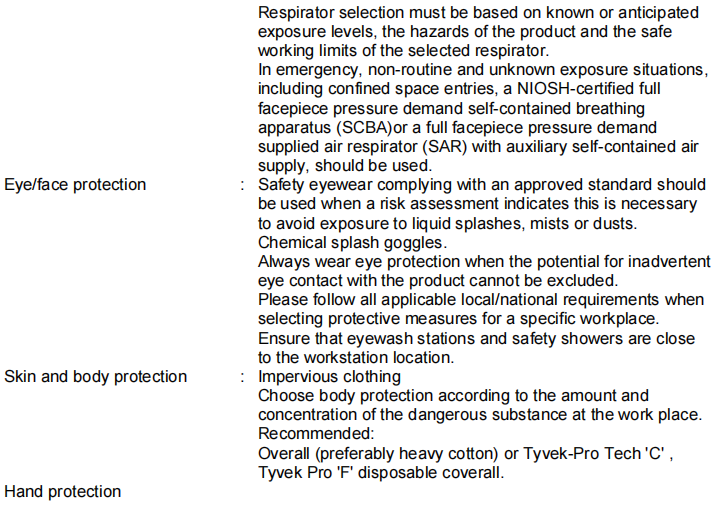
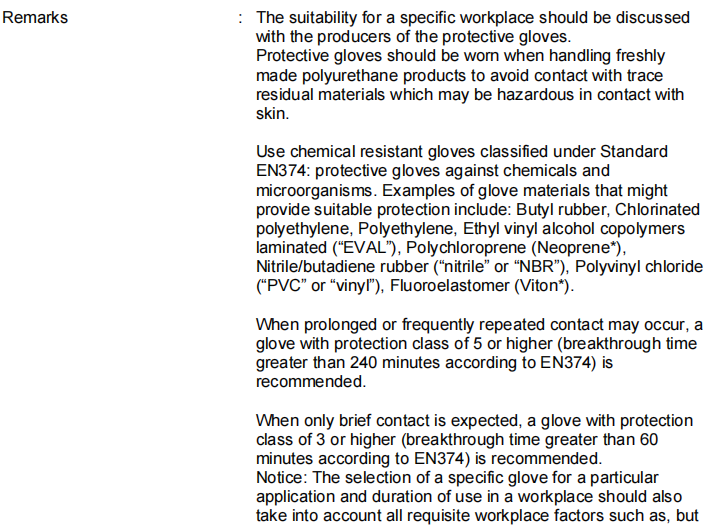
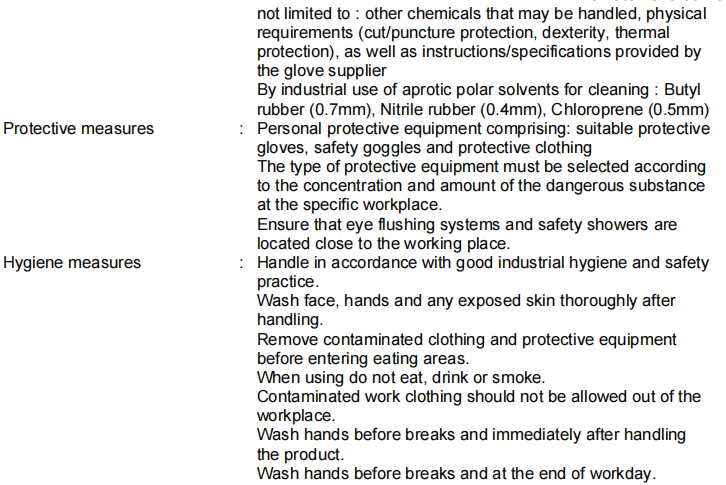
EXPOSURE CONTROLS/PERSONAL PROTECTION
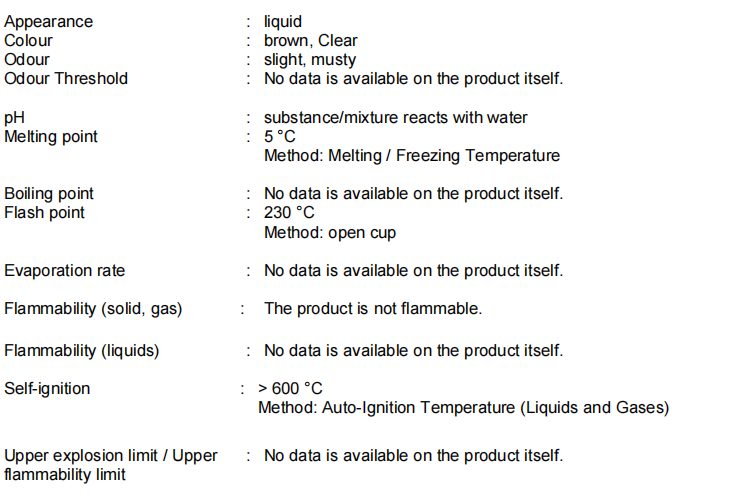
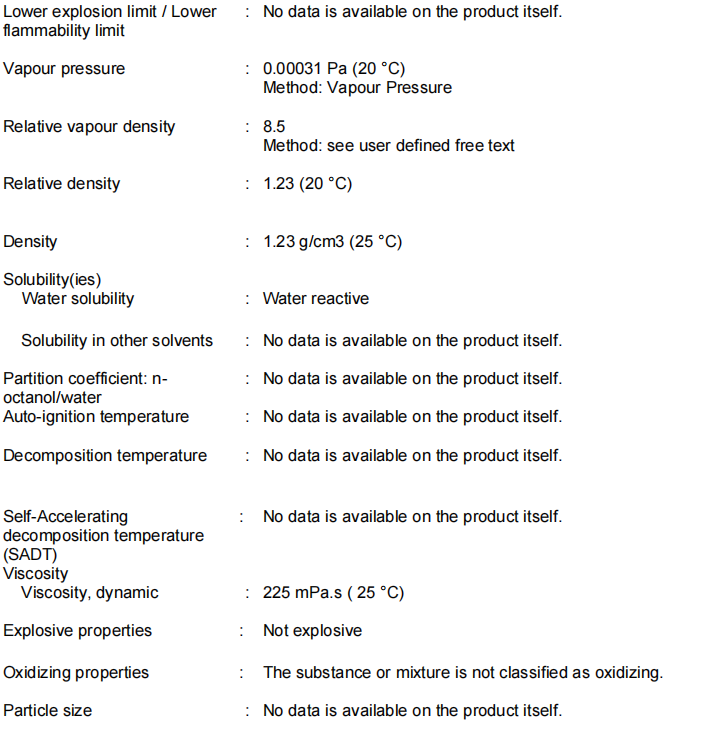
PHYSICAL AND CHEMICAL PROPERTIES
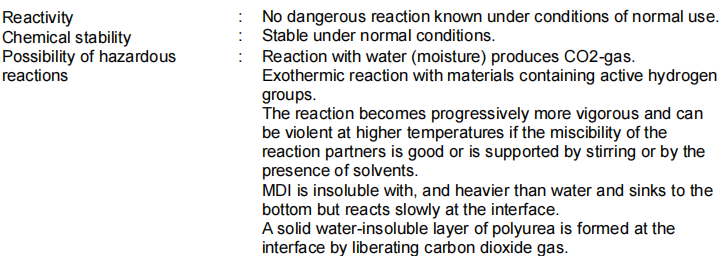
STABILITY AND REACTIVITY
TOXICOLOGICAL INFORMATION
ECOLOGICAL INFORMATION
DISPOSAL CONSIDERATIONS
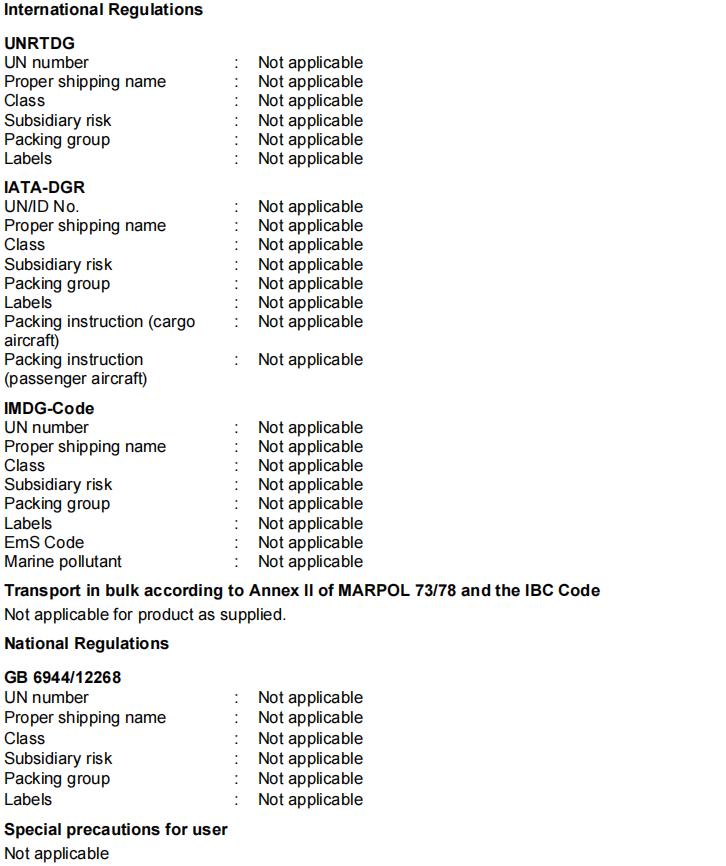
TRANSPORT INFORMATION
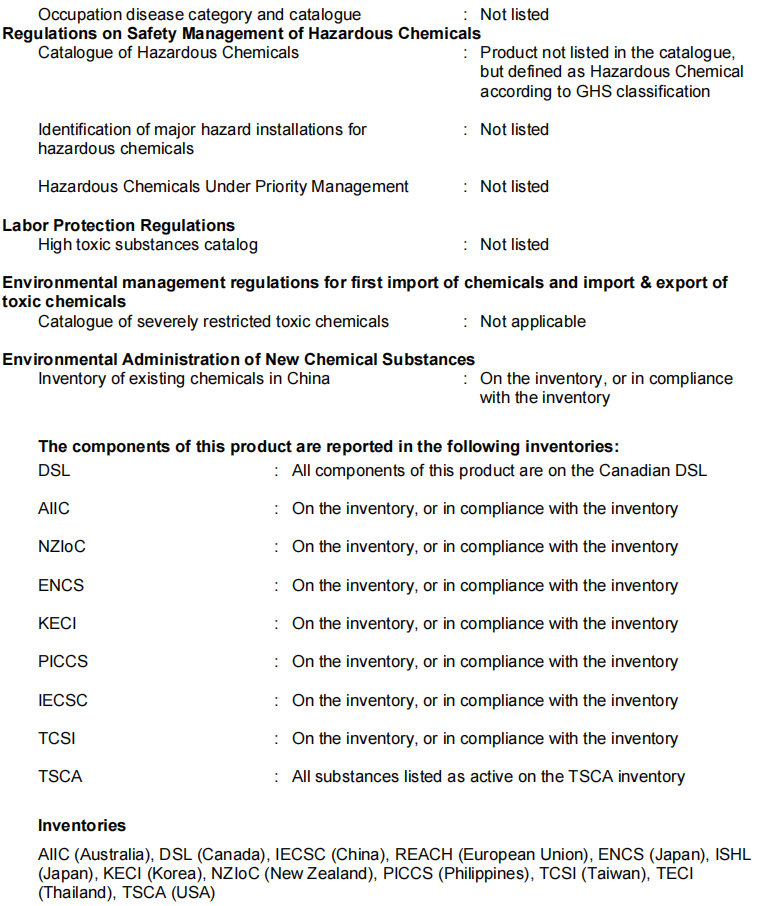
REGULATORY INFORMATION
OTHER INFORMATION

The information and recommendations in this publication are to the best of our knowledge,information and belief accurate at the date of publication, NOTHING HEREIN IS TO BE CONSTRUED AS A WARRANTY, EXPRESS OR OTHERWISE.


IN ALL CASES, IT IS THE RESPONSIBILITY OF THE USER TO DETERMINE THE APPLICABILITY OF SUCH INFORMATION AND RECOMMENDATIONS AND THE SUITABILITY OF ANY PRODUCT FOR ITS OWN PARTICULAR PURPOSE.


THE PRODUCT MAY PRESENT HAZARDS AND SHOULD BE USED WITH CAUTION. WHILE CERTAIN HAZARDS ARE DESCRIBED IN THIS PUBLICATION, NO GUARANTEE IS MADE THAT THESE ARE THE ONLY HAZARDS THAT EXIST.


Hazards, toxicity and behaviour of the products may differ when used with other materials and are dependent upon the manufacturing circumstances or other processes. Such hazards, toxicity and behaviour should be determined by the user and made known to handlers, processors and end users.


The trademarks above are the property of Huntsman Corporation or an affiliate thereof.

NO PERSON OR ORGANIZATION EXCEPT A DULY AUTHORIZED HUNTSMAN EMPLOYEE IS AUTHORIZED TO PROVIDE OR MAKE AVAILABLE DATA SHEETS FOR HUNTSMAN PRODUCTS. DATA SHEETS FROM UNAUTHORIZED SOURCES MAY CONTAIN INFORMATION THAT IS NO LONGER CURRENT OR ACCURATE.

Leave Your Message

Great! We have received your message.

We are unable to process your submission. Please try again.